Tax Credit for Going Digital in Nigeria: 2026 Guide
Tax credit for going digital in Nigeria is no longer just policy talk. It is becoming a real financial incentive …


Tax credit for going digital in Nigeria is no longer just policy talk.
It is becoming a real financial incentive that founders can use to reduce their tax bills legally.
For years, businesses were told to digitize for efficiency.
Now, the government is offering something better: relief.
As Nigeria pushes deeper into digital tax systems and centralized reporting, incentives are being introduced to encourage businesses to modernize early. Founders who understand how these credits work will save money. Those who ignore them will pay more than necessary.
This guide explains what the 2026 incentives look like, who qualifies, and how to claim them without stress.
What Is a Tax Credit for Going Digital in Nigeria?
A tax credit allows businesses to reduce the amount of tax they owe by investing in approved digital infrastructure.
Unlike deductions, tax credits reduce tax payable directly.
In simple terms:
- Spend money on qualifying digital tools
- Document the investment properly
- Offset part of your tax bill
The focus is not on luxury software, but on tools that improve transparency, compliance, and reporting.

Why the Government Is Incentivizing Digital Adoption
The incentives are not random.
Suggested read: Personal Income Tax vs Company Tax: Which Registration Is Better for You?
Nigeria’s tax authorities are pushing for:
- Cleaner audit trails
- Faster compliance reviews
- Reduced manual errors
- Better data visibility
Digital businesses are easier to regulate and support.
By offering a tax credit for going digital in Nigeria, the government encourages voluntary compliance rather than punishment.
This is strategy, not generosity.
Digital Investments That May Qualify for Tax Credits
Not every tech expense qualifies. The focus is on systems that improve financial transparency and operations.
1. Digital Accounting and Bookkeeping Software
Tools that track income, expenses, VAT, and payroll digitally are strong candidates.
Manual systems are being phased out.
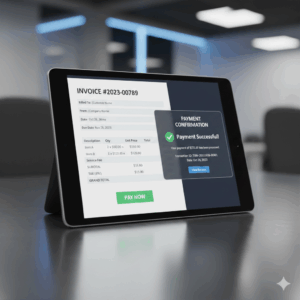
2. E-Invoicing and Digital Payment Systems
Platforms that issue digital invoices and integrate with payments help create verifiable audit trails.
These investments directly support compliance goals.
3. Payroll and HR Automation Tools
Payroll errors create tax risk.
Suggested read: Valuation 101: How Clean Books Increase Your Company’s Worth
Digital payroll systems reduce disputes and improve reporting accuracy.
4. Cloud-Based Financial Storage and Reporting Tools
Secure digital storage for financial records strengthens audit readiness.
This is increasingly required under new reporting frameworks.

How to Claim Digital Tax Credits Step by Step
Step 1: Confirm Eligibility Early
Not all businesses qualify automatically.
Structure, turnover, and compliance history matter.
Step 2: Keep Clean Documentation
Invoices, contracts, and proof of payment must be available.
Poor documentation is the fastest way to lose a credit.
Step 3: Separate Capital Expenses From Operating Costs
Some digital investments qualify as capital expenditure.
Misclassification causes rejections.
Step 4: File Claims Alongside Tax Returns
Credits are not automatic.
Suggested read: Profit Margins: Identifying Which Product Line Is Actually Making Money
They must be claimed correctly and on time.

Common Mistakes That Cause Credits to Be Rejected
Businesses often lose credits due to avoidable errors:
- Paying for tools without proper invoices
- Using personal accounts for business subscriptions
- Claiming non-qualifying tech expenses
- Filing claims late or inconsistently
Under the tax credit for going digital in Nigeria, precision matters.
How Smart Founders Maximize These Incentives
Smart founders treat digital adoption as a financial strategy.
They:
- Choose tools aligned with compliance goals
- Track digital spend intentionally
- Model tax savings before investing
This is where financial clarity tools matter.
Platforms like Zaccheus, an AI CFO for Nigerian founders, help businesses track digital investments, model tax credits, and ensure documentation is audit-ready.

Frequently Asked Questions
Is the tax credit for going digital available to small businesses?
Yes. SMEs and startups may qualify, provided they meet eligibility and documentation requirements.
Does buying any software qualify for the credit?
No. Only approved or qualifying digital tools linked to compliance and reporting typically qualify.
Can freelancers claim digital tax credits?
In some cases, yes. Structure and income level matter.
Suggested read: Real-Time Dashboards: Why Waiting for “End of Month” Reports Is Too Late
Are these incentives confirmed for 2026?
They are part of ongoing digital tax reform initiatives expected to expand into 2026.
What happens if a claim is rejected?
The credit is disallowed, and tax payable remains unchanged. Penalties may apply if misrepresentation is found.
Conclusion: Digitization Now Pays Twice
The tax credit for going digital in Nigeria rewards businesses that modernize early.
You gain efficiency today and tax savings tomorrow.
Founders who understand this shift will spend smarter and pay less.
Those who ignore it will fund the system without benefits.
Call to Action
If you want to digitize your finances, stay compliant, and unlock tax incentives without complexity, explore Zaccheus, the AI CFO built to help Nigerian founders turn compliance into advantage.